Technique 23 Oct 2026
How to bench press with a barbell

Thanos Mpizpos
Strength and conditioning coach
5 min read
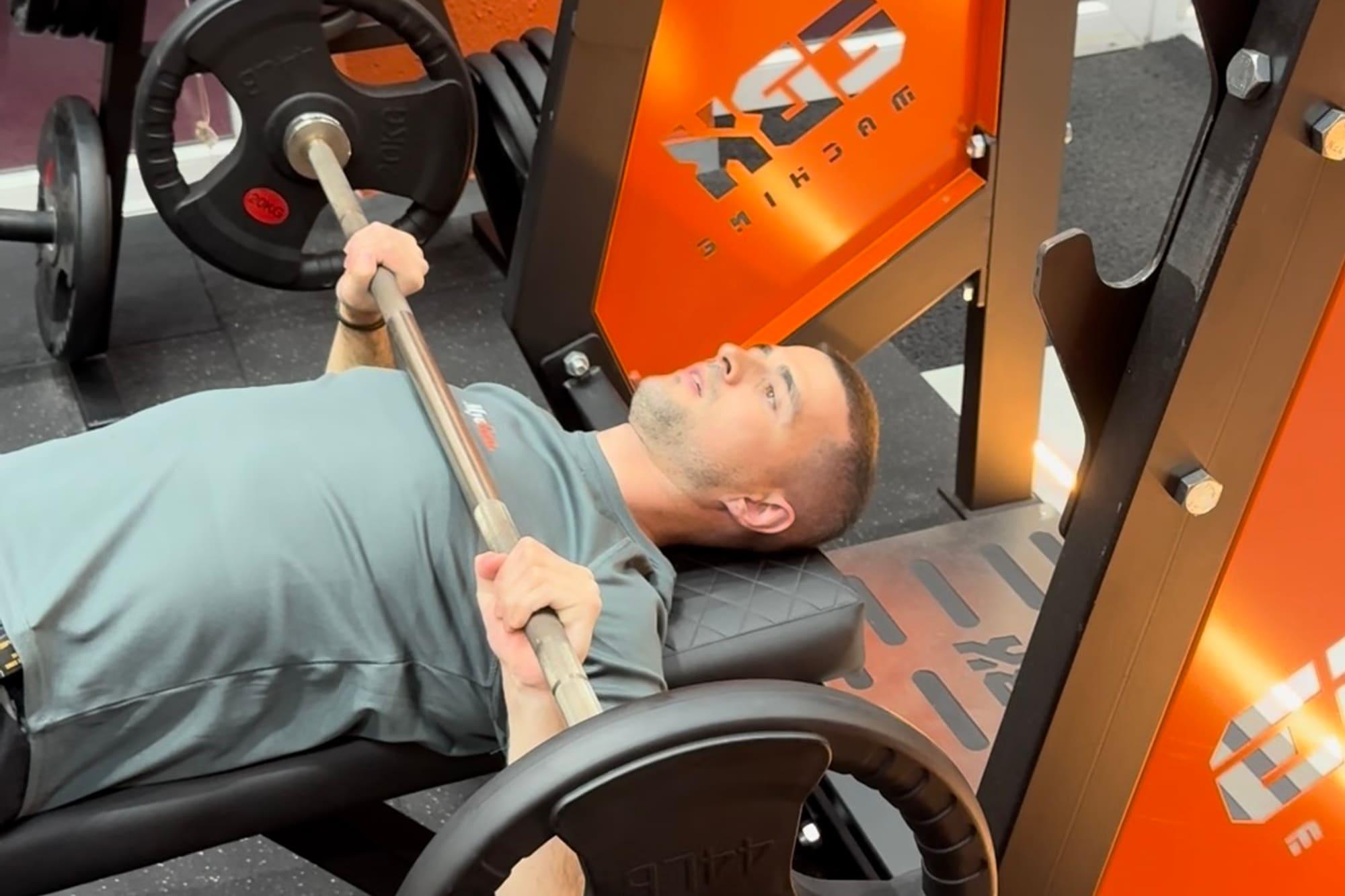
The bench press is the main lift for the chest, shoulders and triceps. A good setup protects your shoulders and lets you press more.
Set up on the bench
Lie down with your eyes under the bar and plant your feet flat on the floor. Your head, upper back and glutes stay on the bench, and both feet stay on the floor, for the whole set. These are the five points of contact, and they give you a stable base to press from.
Grip and shoulder blades
Grip the bar a little wider than your shoulders, with your wrists straight over your elbows. A very wide grip, more than about one and a half times your shoulder width, puts more load on the shoulder joint. Wrap your thumbs around the bar. Pull your shoulder blades back and down into the bench and keep them there. A small arch in your lower back is normal; your glutes stay down.
Lower the bar
Unrack with straight arms and bring the bar over your shoulders. Take a deep breath and brace your stomach. Lower the bar under control to the lower part of your chest, with your elbows at roughly 45 to 70 degrees from your body rather than flared out to the sides. Keep your forearms vertical. The bar touches lightly, without bouncing.
Press
Drive the bar up and slightly back, so it finishes over your shoulders. Push your feet into the floor as you press and keep your shoulder blades pinned. Breathe out once you're past the hardest part, or at the top. Don't snap your elbows into lockout.
Heavy sets need a spotter
Use a spotter or the rack's safety arms for anything close to your limit. Set the arms a little below your chest height when you're lying on the bench, so they stay out of the way on a normal rep but catch the bar if you get stuck. A spotter helps you unrack and takes the bar with both hands if needed. Agree before the set on when they should step in.
Muscles worked
The bench press is a multi-joint lift. Your shoulders and elbows both move, so several muscles work together. EMG studies show the chest and triceps work about equally hard, with the front of the shoulder doing a little less. A narrower grip shifts a bit more of the work to the triceps.
- Pectoralis major: the main mover, especially the middle and lower chest
- Front deltoid: the front of the shoulder
- Triceps: straighten the elbows, mostly near the top of the press
- Back, core and legs: they don't move the bar, but they keep your body steady
What you get from the bench press
You can add weight a little at a time and see clearly whether you're progressing. That's why the bench press shows up in almost every strength program.
- Upper-body strength for anything where you push something away from you
- Muscle in your chest, shoulders and triceps
- Progress you can measure, because you know exactly what you lifted and for how many reps
Common mistakes
Most of these load your shoulders or cost you strength. Film a set from the side to spot them.
- Elbows flared out to 90 degrees
- A very wide grip
- Bouncing the bar off the chest
- Lifting the hips off the bench
- Feet sliding or lifting off the floor
- Wrists bent back
- Losing the shoulder-blade position halfway through the set
How to fit it into your routine
Always start with a warm-up: a set or two with the empty bar, then a few light sets before your working weight. The numbers below are a starting point, not a rule. Only add weight when every rep looks clean.
- Beginners: twice a week, 2 to 3 sets of 8 to 12 reps, with a weight that leaves two or three reps in the tank at the end of the set
- Experienced lifters: 3 to 5 sets. For strength, heavier sets of 3 to 6 reps with 3 to 5 minutes' rest. For muscle, sets of 6 to 12 reps
- Add a pulling exercise for your back in the same session, such as a row, so you train both sides
Should the bar touch your chest?
In most cases, yes. Lower the bar until it lightly touches your lower chest, without bouncing, so you work through the full range. In powerlifting meets the touch is also a rule. If your shoulder hurts at the bottom, don't push through it. Stop and get a physiotherapist's opinion before you carry on.
Is it bad to arch your back when you bench?
Not if it's a small arch. It happens almost by itself when you pull your shoulder blades back and down. The problem is your glutes lifting off the bench or your lower back hurting. The big arch you see from powerlifters shortens the bar path so they can lift more in competition. For general training you don't need it.
What should I do if my shoulder hurts when I bench?
Stop the set and don't keep going through pain. If the pain comes back every time, lasts for days, or comes with weakness or numbness, see a physiotherapist or doctor. They may suggest a narrower grip, a shorter range or dumbbells for a while, but decide that with them, not on your own.
Want someone to check your technique? See group personal training
Share or follow: Instagram