Technique 20 Oct 2026
French press: how to do it for stronger triceps

Thanasis Aggelidis
Physical education coach
4 min read
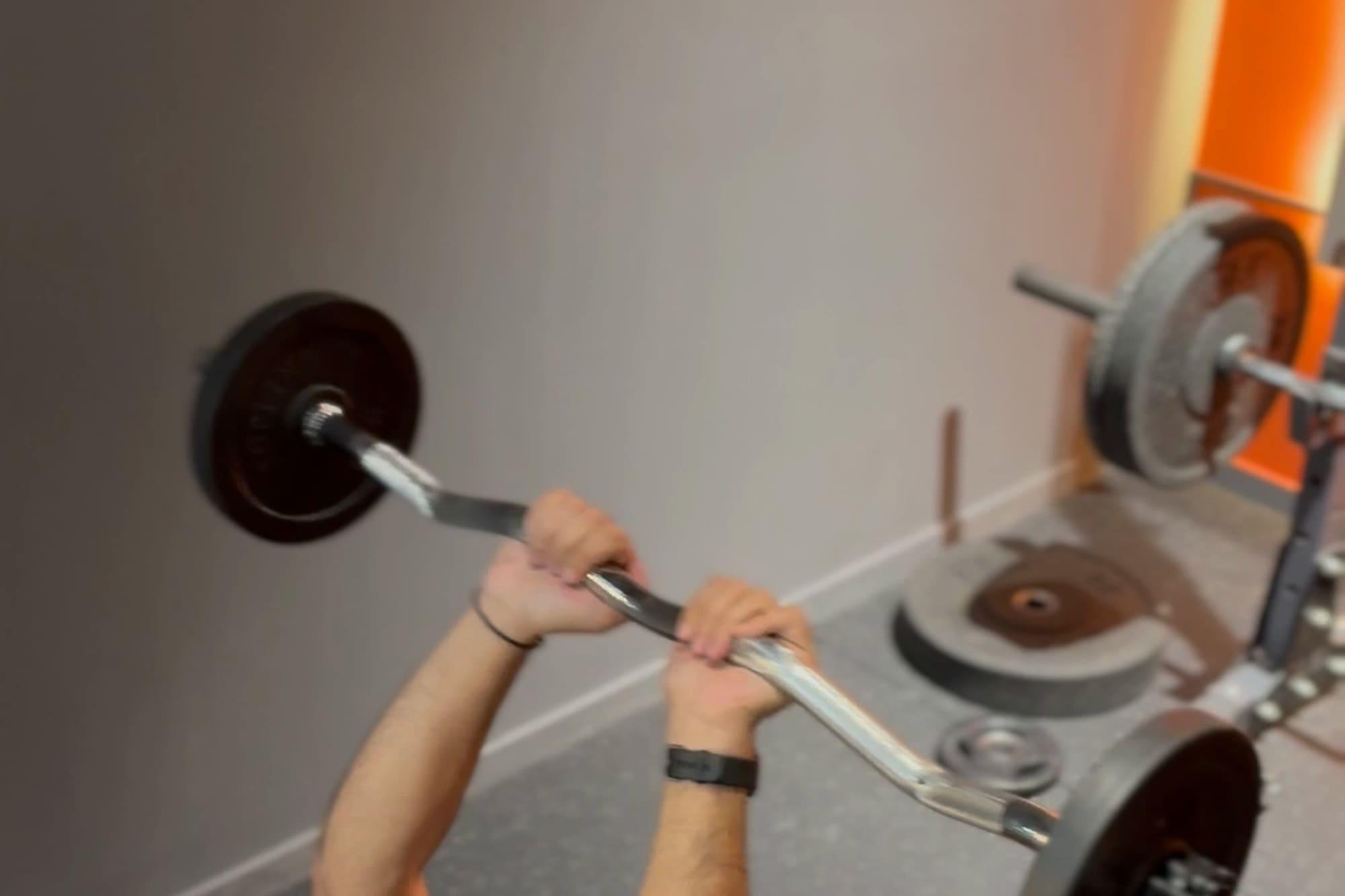
The French press, or lying triceps extension, trains the long head of the triceps. How to do it well without hurting your elbows.
Muscles worked
The triceps makes up most of the back of the upper arm and has three heads: the long, lateral and medial heads. All three join a common tendon at the elbow and straighten it. The lateral and medial heads start on the upper arm bone, so they only work at the elbow. The long head starts on the shoulder blade and also crosses the shoulder. That's why it gets more stretched when your arms are up, over your head. In the French press your upper arms are high and tilted slightly back, so the long head works from a longer length than in a cable pushdown. In a 2023 study, overhead triceps extensions led to more muscle growth than the same extensions with the arms by the sides, mostly in the long head. It was a small study using cables, but it shows why it's worth training your triceps with your arms up as well.
Set up
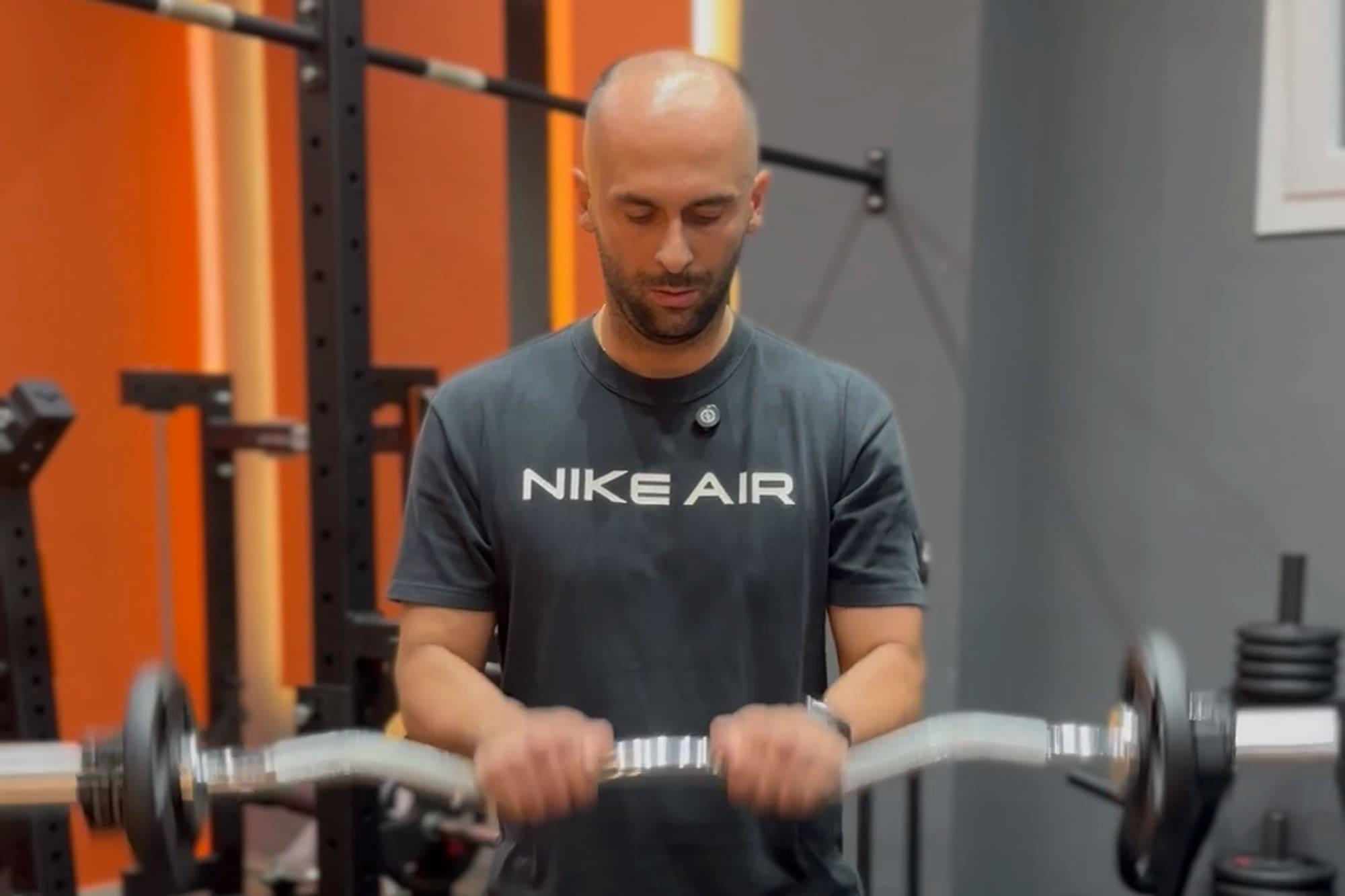
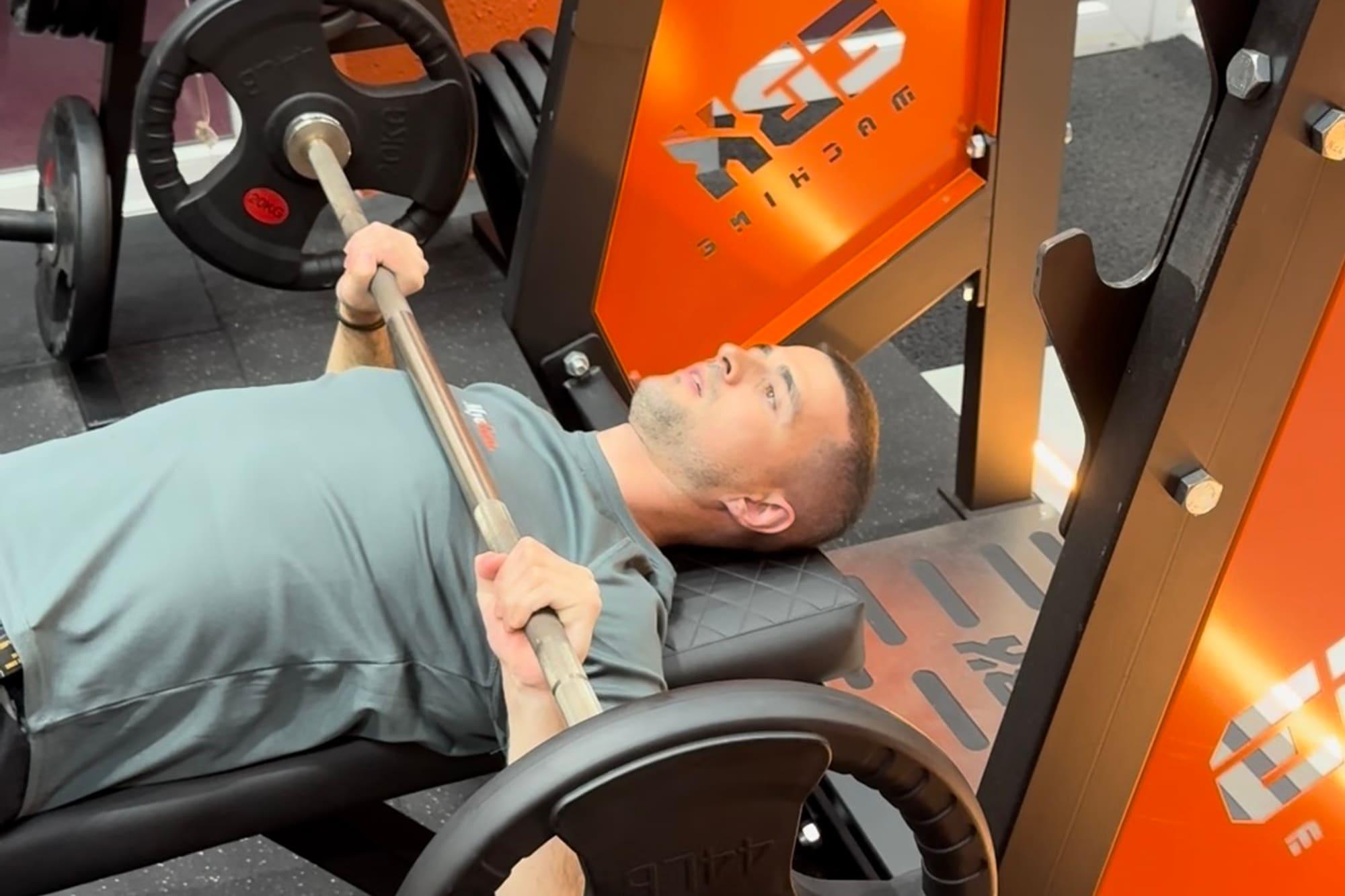
Lie on a flat bench with an EZ bar. Grip it on the inner bends, hands about shoulder-width apart. Start with your arms straight above your shoulders, tilted slightly back towards your head.
- Head near the end of the bench, so the bar has room to come down
- Feet flat on the floor and your back on the bench
- Wrists straight, in line with your forearms
- Elbows pointing up, not out to the sides
The movement, step by step
Your upper arms stay still for the whole rep. Only your elbows move.
- Breathe in and bend your elbows
- Lower the bar towards the top of your head over two to three seconds
- Stop when your forearms are just past parallel, without bouncing
- Straighten your arms to bring the bar back up and breathe out
- Stop just short of snapping your elbows locked, then start the next rep
Common mistakes
Most of them come from the same thing: more weight than you can control. The bar travels over your face, so don't rush, and ask someone to spot you when the weight gets heavy.
- Elbows flaring out to the sides
- Upper arms moving, so it turns into a press or a pullover
- Dropping the bar fast and bouncing at the bottom
- Locking out hard at the top
- Wrists bending back
- Cutting reps short to lift more weight
Variations
The movement stays the same: upper arm high and still, the work at the elbow. Only the equipment changes, and one option may suit your elbows better than another.
- EZ bar: the classic version, kinder to the wrists than a straight bar
- Dumbbells: each arm works on its own, and you can hold them with your palms facing each other
- Cable: lying down, or standing with your back to the cable, with tension through the whole range
- Seated with one dumbbell overhead: your arms go higher and the long head stretches even more
How to fit it into your routine
Do it after the main lifts of the day, such as bench or overhead presses. Those already work your triceps, so count them too. Two to four sets of 8 to 15 reps, once or twice a week, is enough for most people. End each set one or two reps before your form breaks down. Once you reach the top of the rep range on every set, add a little weight.
Start light
Elbows don't like heavy, fast reps. Choose a weight you can control for every rep and add load slowly. If you're not sure about your technique, ask one of our coaches to watch a set.
Why do my elbows hurt during French presses?
It's usually too much weight, lowering too fast, locking out hard at the top or letting your elbows flare. Drop the weight, slow the lowering and try dumbbells with your palms facing each other, or a cable. If the pain is sharp, doesn't settle within a few days or you feel it outside the gym too, stop the exercise and see a physiotherapist or doctor.
Is the French press the same as a skull crusher?
Essentially, yes. It's also called the lying triceps extension. The difference is where the bar goes. In a skull crusher it usually comes down towards the forehead. Here it goes towards the top of your head, with your upper arms tilted slightly back, which stretches the long head a little more. In Greek gyms, the seated overhead dumbbell version is often called a French press too.
French press or cable pushdown?
You don't have to choose. In a pushdown your arms are by your sides, so the long head isn't stretched much. In the French press your arms are up and the long head works from a longer length. One of each during the week trains the triceps well.
Want someone to check your technique? See group personal training
Share or follow: Instagram