Training 1 Nov 2026
Three biceps exercises for bigger arms
Thanasis Aggelidis
Physical education coach
4 min read
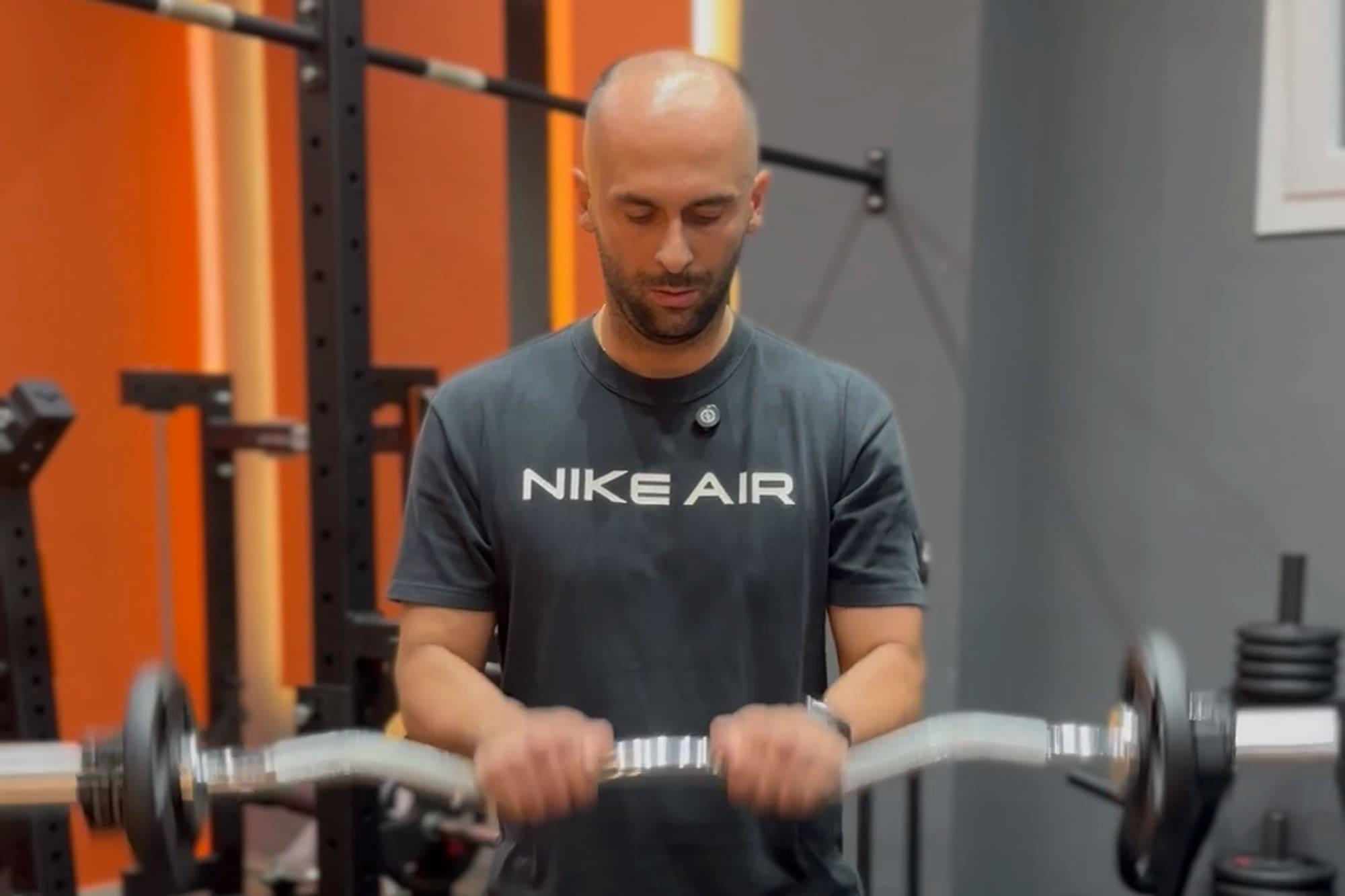
Three exercises that train the biceps from different angles, and how to do each one so the arms do the work and not the back.
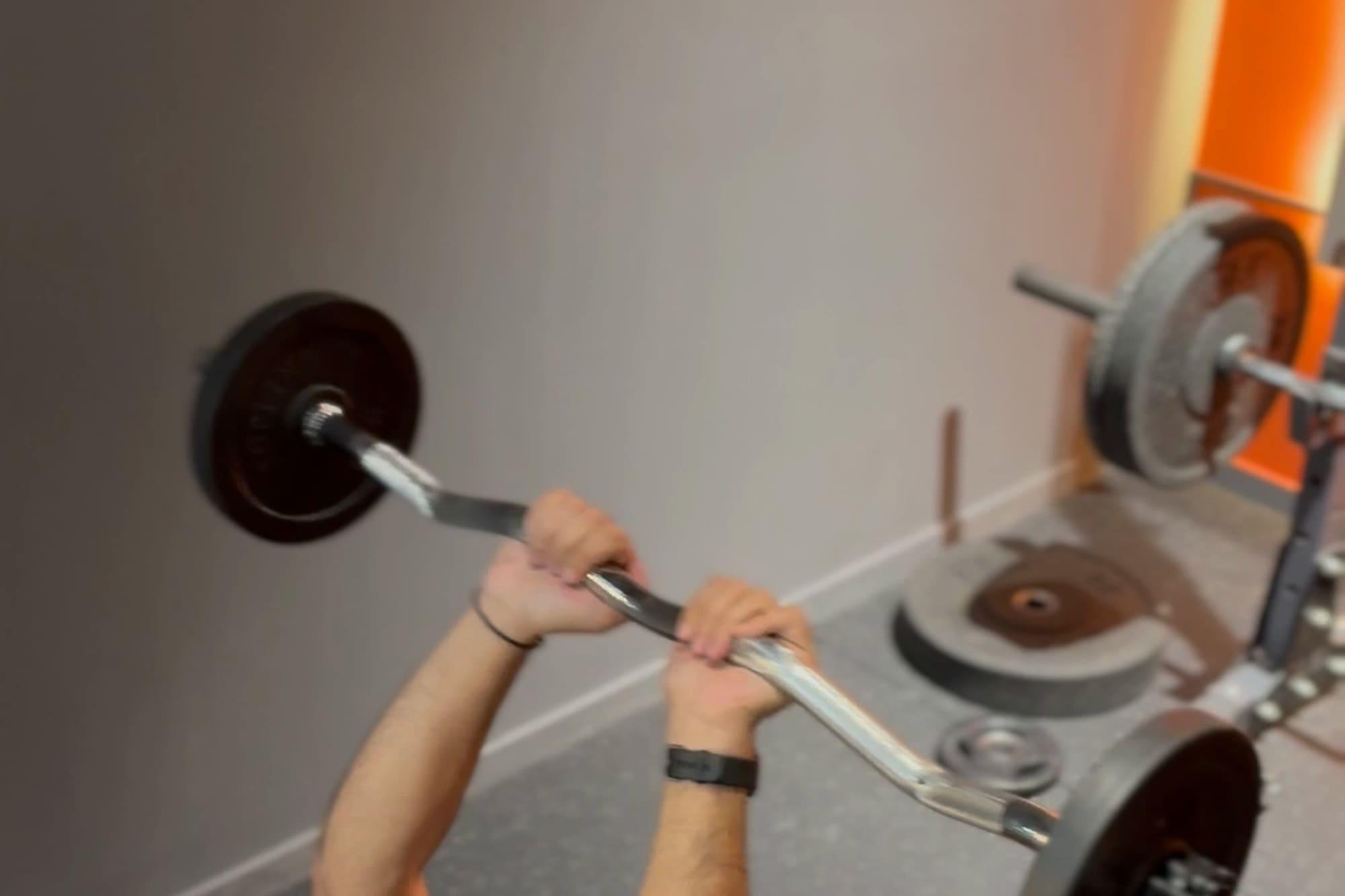
1. EZ-bar curl
The angled grip of the EZ bar is easier on the wrists than a straight bar, which makes it a good first biceps exercise. The movement is simple, but every rep needs control.
- Hold the bar on the angled parts, palms up, hands about shoulder-width apart.
- Stand tall with your knees slightly bent and your core braced. Keep your elbows against your sides.
- Bend your elbows and bring the bar up towards your shoulders without swinging. Your elbows stay where they are.
- Take two to three seconds to lower the bar until your arms are almost straight.
2. Hammer curl
Hold the dumbbells with your palms facing each other, as if you were holding a hammer. The neutral grip brings in more of the brachialis and the brachioradialis, which add size to the upper arm and the forearm.
- Stand with the dumbbells by your thighs and your arms straight.
- Curl the dumbbells towards your shoulders, keeping your wrists straight.
- You can lift both arms together or one at a time.
- Lower slowly all the way down instead of letting the dumbbell drop.
3. Dumbbell curl with a twist
Start with your palms facing in and turn them up as you curl. The biceps bends the elbow and also turns the forearm, so the twist trains both of its jobs.
- Turn your hand gradually during the first half of the lift, not suddenly at the top.
- At the top your palms face up and your elbow is still by your side.
- On the way down, turn your palms back in.
Muscles worked
The biceps brachii sits at the front of the upper arm. It has a long head and a short head, which join into one tendon on the radius, one of the two forearm bones. It bends the elbow and turns the palm up. Both heads work in every curl, so no exercise trains just one of them. Two other muscles help: the brachialis, which lies under the biceps and bends the elbow whatever your grip, and the brachioradialis, at the top of the forearm.
- EZ-bar curl: with your palms almost facing up, mostly the biceps, helped by the brachialis.
- Hammer curl: a little less biceps, more brachialis and brachioradialis.
- Curl with a twist: the biceps in both of its jobs, bending and turning.
Common mistakes
Most biceps mistakes have the same cause: a weight you can't control. When that happens, your back and shoulders take over.
- Swinging the body to lift the weight
- Letting the elbows drift forward so the shoulders do the work
- Cutting the range short and not straightening the arms at the bottom
- Letting the weight drop instead of lowering it
- Bending the wrists
- Choosing a weight you can only lift with momentum
Where they fit in your workout
Do your curls after the big lifts of the day, like rows and pull-ups, which also work the biceps. If you curl first, your arms will be tired for the pull-ups. You don't need all three exercises every session. Pick one or two and rotate them.
Sets and reps
Do two to four sets of 8 to 15 reps of each, stopping a rep or two before your form breaks down. Rest one to two minutes between sets. Add reps first. Once you can do 15 clean reps on every set, add a little weight and start again from fewer reps.
How many times a week should I train biceps?
Twice a week is enough for most people. Research suggests that what matters most is how many sets you do across the week, more than how many days you spread them over. Splitting them over two sessions keeps each set fresher and cleaner. Leave at least one rest day in between.
Do I need biceps exercises if I already do pull-ups and rows?
Pull-ups and rows work the biceps, especially chin-ups with your palms facing you. If you are just starting out, they are often enough. If you want stronger, fuller arms, two or three sets of curls at the end of the session help, because the biceps does all the work there.
What if my elbow hurts during curls?
Stop the exercise and don't train through the pain. Sore muscles a day or two after training are normal. Pain inside the elbow or in the tendon while you lift is not. See a physiotherapist or doctor before you go back to curls.
Want someone to check your technique? See group personal training
Share or follow: Instagram